Sunrisers vs Welsh Fire at Headingley — captain notes, pitch read, and a points-first fantasy plan for Match 27
A reading-desk preview of Match 27 of The Hundred Men's 2026 between Sunrisers Leeds and Welsh Fire, played at Headingley on the evening of 9 August: weather, pitch behaviour, the predicted XIs, two fantasy combinations to weigh against the points reference, and what the captain pick should reward at a high-scoring ground.

Two teams level on points, one home advantage, one evening start that often rewards pace-off slower balls.
Match 27 of The Hundred Men's 2026 is the fixture that separates a top-three finish from a mid-table week — the table, the venue, and the start time are the first three lines of the read.
Match 27 of The Hundred Men's 2026 puts Sunrisers Leeds against Welsh Fire at Headingley on Sunday evening, 9 August 2026, with the first ball scheduled for 7:00 PM IST (1:30 PM GMT, 2:30 PM local). Both teams sit on 16 points after a shared cluster of mid-season results, which means the table is the wrong place to read the form into: the difference between the two sides at the moment is the run of recent fixtures rather than the count of points. Sunrisers are coming off two wins; Welsh Fire are coming off a heavy defeat. The run of results is the only signal the points table does not yet show, and the run of results is what the captain pick should weight.
London Spirit and Birmingham Phoenix have already been eliminated from the tournament, which narrows the live race and reduces the number of dead rubbers in the closing week. The elimination list also tells the reading desk that the points table from here on is read as a top-four contest, not as a top-six race. Two more wins from either side tonight would put one of them firmly in the top four; a third straight loss for Welsh Fire would push them out of it.
The head-to-head reads close to neutral across the five previous meetings: two wins apiece and one match called off. A 2-2-1 ledger with the abandoned match counted in is not a strong enough pattern to override the recent form read; it is a tie-breaker only when the captain decision is otherwise even. The captain decision is rarely otherwise even, and tonight is no exception.
Headingley is a high-scoring ground, and August evening conditions narrow the gap between bat and ball.
The Headingley pitch has produced the highest aggregate scores of the season so far, and the overcast evening forecast tightens the contest by a small but measurable margin.
The Headingley pitch this season has been a high-scoring surface, with three matches producing a highest team total of 241 and an average score range that has sat between 180 and 190. The boundary on the leg side has been notably shorter than the off-side boundary, and the outfield has carried well through the early part of the summer. Excellent bounce has been the surface's most consistent feature, which favours batters who work the ball off the back foot and bowlers who can hit the top of off stump at good pace.
The evening weather forecast for Leeds on 9 August is overcast with the chance of a short, light shower, a temperature around 22°C, and average humidity close to 56%. Overcast evening conditions at Headingley tend to bring the slower ball into the bowler's hand earlier than a clear evening would. The bowler who lands the slower ball at the right length — full and wide of off, or short and into the pitch — tends to take wickets in clusters once the ball gets soft. The reading desk treats overcast evenings as a small swing towards the bowlers and a small swing away from a pure run-rate fantasy pick.
The combination — a high-scoring ground plus an overcast evening plus a short boundary on one side — gives a fantasy reader three competing signals. The high-scoring ground argues for picking more batters and more aggressive all-rounders. The overcast evening argues for picking one or two specialist bowlers who can exploit the slower ball. The short leg-side boundary argues for picking one batter who targets that side of the ground specifically. A balanced XI on this surface is one that respects all three signals rather than chasing one of them.
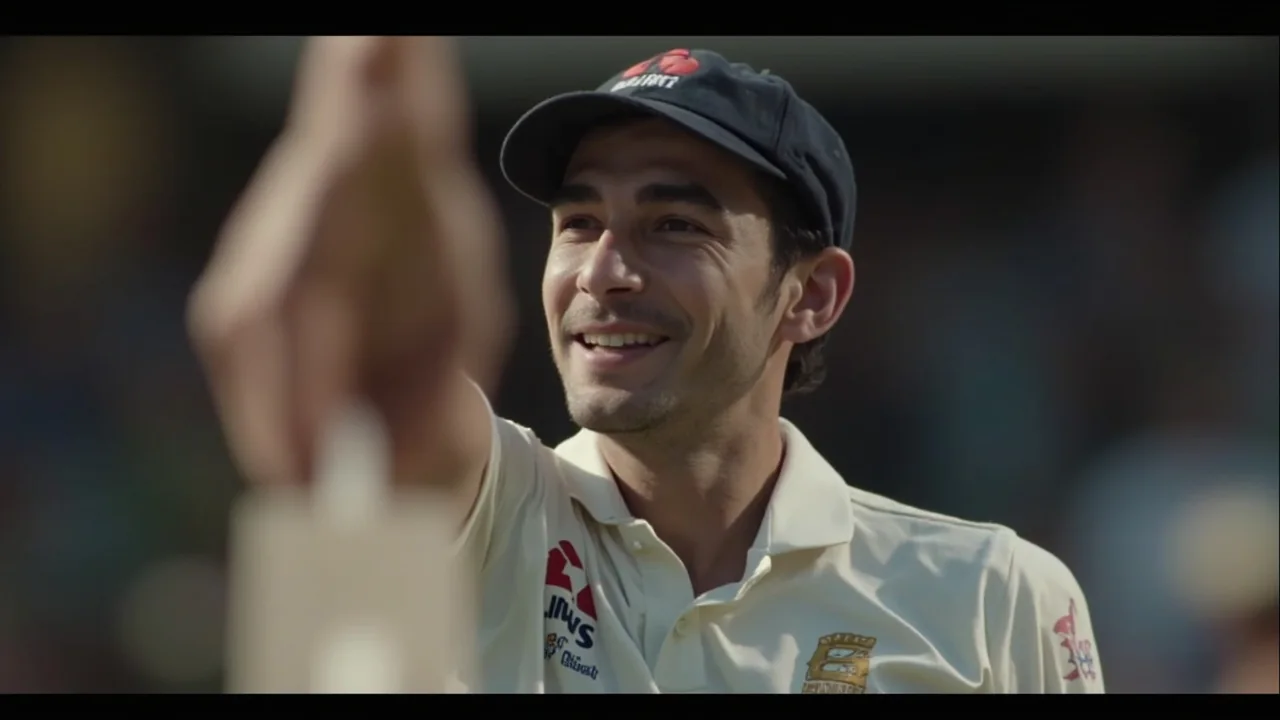
Sunrisers Leeds look the more rounded side on paper; Welsh Fire's top three carries most of their innings weight.
A short XI-by-XI pass to set up the fantasy selection later in the read, with the names that need explaining before the team sheet is built.
The predicted Sunrisers Leeds XI reads Mitchell Marsh, Ryan Rickelton (wk), Harry Brook, Zak Crawley (c), Dan Lawrence, Matthew Revis, Brydon Carse, Matthew Potts, Nathan Ellis, Liam Patterson-White and Abrar Ahmed. The batting has depth from one to seven, with Marsh and Brook the two candidates to take the powerplay apart and Crawley the stabiliser in the middle overs. The bowling has variety: Ellis and Carse for pace, Potts for disciplined seam, Patterson-White for spin, and Abrar for wrist-spin through the middle. The XI has the shape of a team that does not depend on any one player to win the evening.
The predicted Welsh Fire XI reads Philip Salt (c) (wk), Matthew Short, Joe Root, Rachin Ravindra, Jordan Cox, Tom Kohler-Cadmore, Ben Kellaway, Marco Jansen, Chris Woakes, Lockie Ferguson and Sam Cook. The top three — Salt, Short, Root — carry most of the innings weight, with Ravindra and Cox expected to accelerate through the middle. The bowling leans heavily on Woakes and Ferguson for pace, Jansen for variety, and Cook for control. The XI has fewer safety nets than Sunrisers: if Salt and Short do not fire at the top, the innings tends to lean harder on Root than the captain would like.
The reading desk's habit is to read the side that carries its weight across more players as the safer fantasy base, regardless of headline reputation. Tonight, that side is Sunrisers Leeds, both because their top order has been firing in the last two games and because their bowling has more than one bowler who can take wickets in a cluster. The Welsh Fire XI is more top-heavy and more dependent on two or three names producing on the night. A fantasy team that mirrors the side with the broader contribution base will usually edge a fantasy team that mirrors the side with the louder ceiling.
A captain pick is a points-weighted choice, and the points reference on the app is the document to weigh it against.
The captain choice on this surface is between Mitchell Marsh, Joe Root and Ryan Rickelton — the read that follows sets out why, with the points reference doing the tie-break.
The captain pick is the highest-leverage choice in any fantasy XI, because the points reference in most formats doubles the captain's score and triples the vice-captain's score. A reader who picks the captain without first reading the points reference is reading backwards: the captain should be the player whose role maximises the points categories the format weights most heavily, not the player with the loudest recent score. The reading desk's app guide walks through the points system page on the app in eight minutes, and the page is worth reading once before any captain pick is locked in for an evening fixture.
For tonight, the three captain candidates are Mitchell Marsh, Joe Root and Ryan Rickelton. Marsh offers the all-rounder profile: runs at the top of the order, overs with the ball, and the option of catching in the outfield. The all-rounder profile usually scores across more points categories than a pure batter, which is the structural reason the reading desk favours Marsh when the conditions suit both bat and ball. Root offers the steady accumulator profile: high run-rate against pace, fewer aerial shots, and the kind of innings that scores well in the boundary-bonus category even without a fifty. Rickelton offers the wicketkeeper-batter profile: bonus points for catches and stumpings on top of any runs scored, which lifts his ceiling in matches that go deep.
The reading desk's captain read for tonight is Marsh, with Root as vice-captain. The argument is structural rather than sentimental: Marsh's all-rounder profile matches the conditions (bat-friendly surface, bowler-friendly evening, short leg-side boundary), and Root's accumulator profile is the safest hedge if the surface flattens further under lights. Rickelton is the differential captain pick for readers who want the wicketkeeper bonus, and the differential is the right choice in larger contests where the field is likely to captain Marsh.

A balanced XI and an all-rounder-heavy XI, side by side, with the points rationale for each.
The reading desk does not publish a single team — it publishes two combinations the reader can weigh against their own points reference and contest size.
The first combination is the balanced XI. Wicketkeepers: Phil Salt and Ryan Rickelton. Batters: Harry Brook and Joe Root. All-rounders: Mitchell Marsh, Marco Jansen, Matthew Short and Rachin Ravindra. Bowlers: Nathan Ellis, Lockie Ferguson and Brydon Carse. Captain: Mitchell Marsh. Vice-captain: Joe Root. The shape of this XI is three wicketkeeper-batter candidates, two specialist batters, four all-rounders, and three specialist bowlers. It mirrors the conditions: enough batting to handle a 180-plus first innings, enough bowling variety to handle an overcast evening, and enough all-rounders to keep the points flowing across every category on the reference.
The second combination is the all-rounder-heavy XI. Wicketkeepers: Phil Salt and Ryan Rickelton. Batters: Harry Brook. All-rounders: Mitchell Marsh, Marco Jansen, Matthew Short, Rachin Ravindra. Bowlers: Nathan Ellis, Lockie Ferguson, Brydon Carse and Matthew Potts. Captain: Ryan Rickelton. Vice-captain: Rachin Ravindra. The shape of this XI trades a specialist batter for an extra bowler and pushes the all-rounder count higher. The differential is the wicketkeeper-bonus captain on Rickelton, which scores well in matches where the keeper takes a catch or effects a stumping. The trade-off is a thinner top-order; readers who go with this combination are betting that the all-rounders' points across categories will out-score the missing specialist batter's points.
Which combination is the right one depends on the contest. Smaller contests with sharper opposition reward the balanced XI, because the points categories are usually weighted evenly and the captain doubling carries less differential value. Larger contests with thousands of entries reward the differential pick — Rickelton as captain — because most of the field will captain Marsh, and the differential captain is the only path to a leaderboard jump. The reading desk does not pick for the reader; the desk sets out the two combinations and the conditions each one answers.
Sunrisers Leeds are the side the reading desk backs, and the fantasy XI should reward the broader batting unit.
The prediction is a structural read, not a forecast — the fantasy XI should reward the side with the wider contribution base.
The reading desk's match prediction is Sunrisers Leeds. The argument is structural rather than emotional. Sunrisers have a top-three batting unit that has been firing in the last two games, with Marsh and Brook the two players who can take the powerplay apart and Crawley the stabiliser who can carry the middle overs. Welsh Fire's batting is more top-heavy, and the dependence on Salt and Short at the top of the order is a fragility the reading desk does not want to bet against. A top-heavy side that loses an early wicket at a high-scoring ground tends to fall back into a containment innings; a deeper side tends to recover.
The bowling comparison also favours Sunrisers, by a smaller margin. Ellis, Carse and Potts form a varied seam attack that suits home conditions, and the inclusion of Abrar Ahmed through the middle overs adds a wrist-spin option that Welsh Fire's batting has not seen much of in the last two games. Welsh Fire's bowling leans heavily on Woakes and Ferguson for pace, with Jansen as the variety bowler and Cook as the control bowler. The attack is competitive but less varied, and the reading desk treats variety on a high-scoring ground as the larger edge.
The fantasy XI on this prediction should reward Sunrisers' broader contribution base rather than picking the loudest individual ceiling. That is the structural reason the captain pick is Marsh rather than Root: Marsh's all-rounder profile scores across more categories, and the broader scoring profile is the one the prediction rewards. Root as vice-captain is the hedge if the match plays out as a long, steady accumulator's innings rather than an all-rounder's evening.
Three cues that will move the fantasy XI once the playing XIs are confirmed.
The toss, the playing-XI list, and the first two overs are the three cues the fantasy XI should be re-read against, not the predicted XI the desk has published.
The first cue is the toss. Sunrisers have been stronger chasing at home this season, with a record that suggests the dew in the second innings tends to settle the surface for batting. If Sunrisers win the toss and bowl first, the fantasy XI should weight the second-innings batters slightly higher and consider swapping the captain pick to a second-innings specialist. If Welsh Fire win the toss and bat first, the fantasy XI should weight the first-innings bowlers more heavily, because Welsh Fire's top three is the part of the innings that scores the most first-innings points.
The second cue is the confirmed playing XI. The predicted XIs the desk has published are based on the pre-match read; the confirmed XIs at the toss can differ by one or two names. Any difference in the playing XI is a signal to re-read the captain pick. If a key all-rounder is rested, the captain pick should drop to a specialist batter; if a frontline pace bowler is replaced, the bowling points should be rebalanced toward the wrist-spin option. The reading desk treats the playing XI as a fresh read, not as a confirmation of the predicted XI.
The third cue is the first two overs. If the bowlers are getting the ball to move under lights from the start, the captain pick should favour a specialist batter who plays the moving ball well; if the bowlers are landing it short and the batters are pulling, the captain pick should favour an all-rounder with a strong pull shot. The first two overs are not a guess — they are the read the desk uses to confirm or revise the captain pick before the lock-in window closes. The reading desk's habit is to wait for the first two overs before locking the captain, and to keep the rest of the XI stable while the captain decision is finalised.
Match 27 is a captain decision dressed up as a fixture preview, and the points reference is the document that does the tie-break.
A short close: the read the desk has settled on, the next match to watch, and where the points reference lives on the app.
The desk's settled read for Match 27 is Mitchell Marsh as captain, Joe Root as vice-captain, and Sunrisers Leeds to win. The arguments are structural: a high-scoring ground that flattens slightly under an overcast evening, a Sunrisers side with more batting depth and more bowling variety, and a Welsh Fire top three that carries most of the innings weight on its own. The fantasy XI that mirrors those three arguments is the XI that scores across the most points categories, regardless of which team eventually wins.
The next match to watch is the fixture on the following evening, which will set up the closing week of the group stage. The reading desk's points-system reference on the app is the slow read that complements this preview, and the app guide is the eight-minute tour that walks through how the reference page is laid out inside the contest list. Both reads are short, both fit inside the pre-toss window, and both leave the captain pick to the reader once the points categories have been weighed.
Predictions are read for their structure, not for their certainty. The reading desk does not publish certainty. The desk publishes the read — the conditions, the XIs, the captain pick, the combinations — and lets the points reference on the app do the rest. The combination of a structural preview and a points-first fantasy plan is the smallest useful reading habit for an evening fixture at a high-scoring ground.