Durham vs Lancashire, T20 Blast 2026 Match 52: a customer-care reading of a pre-match fantasy preview
A customer-care reading of the BDCricTime pre-match fantasy preview for Durham vs Lancashire, T20 Blast 2026 Match 52 at the Riverside on 9 June 2026: form, head-to-head, pitch, probable XIs, key-player card, and the small verification habit that turns a fantasy preview into a support-ready notebook.
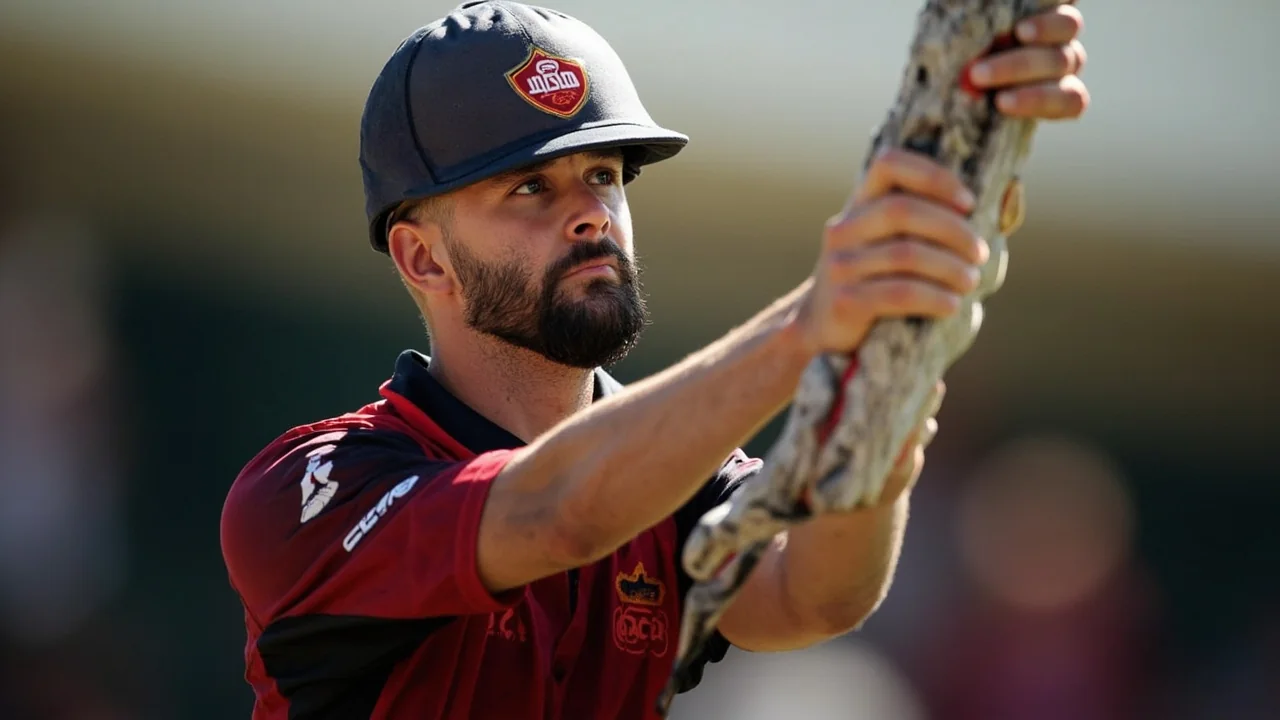
On 9 June 2026, Durham hosted Lancashire in Match 52 of the T20 Blast 2026 North Group at the Riverside, and the BDCricTime preview reads like a customer-care ticket the reader can fill in before the toss.
The fixture was a North Group game between Durham and Lancashire at the Banks Homes Riverside in Chester-le-Street, scheduled for an 11:00 PM IST start on 9 June 2026, and published by BDCricTime as a Dream11 fantasy preview on the morning of the match.
Durham came into the fixture on three straight defeats after opening the season with two consecutive wins. The slide ended most recently in a chase that fell short at home against Northamptonshire at Chester-le-Street, where Callum Parkinson returned 3/19, Ben Raine took 2/12 and Nathan Sowter 1/20 in a defence of 146 that held for one fewer over than Durham needed. Lancashire arrived with one win from five, after a 106-run defeat at Headingley against Yorkshire and a loss to Glamorgan that Liam Livingstone's 81 off 37 balls and 3/13 could not turn around. The same Glamorgan match had opened with a 50-run stand between Keaton Jennings and Marcus Harris.
Head to head across the most recent five T20 meetings, Lancashire had won four, with Durham's only win in that stretch being a two-run margin. The Riverside pitch was described in the BDCricTime preview as seam-friendly with long square boundaries and a projected average score of 165-170. The preview predicted a Durham home win. The match is the only verified fixture in this preview; everything else is the customer-care reading of what the preview tells a reader to write down before submitting a team.
The reason a fantasy preview reads like a customer-care ticket is that the preview already names the rows a reader has to verify: venue, squads, form, head-to-head, pitch behaviour, projected score, probable XI, and the key-player card. Those eight rows are the eight notes the customer-care desk asks a reader to write down before contacting support. The preview is a draft of the notebook, not a tip sheet, and the notebook is the cheapest read on what the customer-care habit asks a fantasy reader to keep.
A fantasy preview that names venue, squads, form, head-to-head, pitch, projected score, probable XI and key-player card is already eight rows of the notebook the customer-care desk asks a reader to fill in before submitting a team.
The customer-care habit is not about writing more; it is about writing the right eight rows in the right order before the wallet opens. A fantasy preview that supplies the eight rows is the cheapest draft of that notebook the desk has seen.
Row one is the venue and the start time. The preview pins both: Riverside Ground, Chester-le-Street, 11:00 PM IST on 9 June 2026. A reader who submits a team without writing down the venue and the start time is a reader who has treated the contest card as the venue, and the contest card is rarely the venue. The customer-care desk's habit is to write the venue and the start time in the first line of the notebook so the rest of the rows can be scored against the right clock.
Row two is the squads. A pre-match fantasy preview names the likely batting order and the likely bowling shape for each side. A reader who skips the squad row is a reader who has submitted a team without a captain, vice-captain, or bowling role check, and an unchecked role is the cheapest reason a contest entry lands in the support queue the morning after the match. The customer-care habit is to write the squad row before the wallet opens, not after the contest closes.
Row three is the form ledger. The preview records Durham's three-match slide and Lancashire's one-from-five start to the North Group. A form ledger written down is a form ledger the reader can re-open the morning after the match, when a points-table query is more useful than a points-table reading. The form row is the row the customer-care desk uses to decide whether the entry was a misread or a misfortune, and a misread is the only verdict the desk can defend to support.
Row four is the head-to-head row. The preview names the four-from-five Lancashire record across the last five T20 meetings, with Durham's two-run win as the only exception. A head-to-head row written down is a head-to-head row the reader can quote in the support chat if the contest is settled on a tiebreaker, and a tiebreaker is the cheapest contest result the support team has to escalate. The customer-care habit is to keep the head-to-head row on the notebook, not in the inbox.
Row five is the pitch and projected score. The preview names a seam-friendly surface, long square boundaries, and a 165-170 average. A pitch row written down is a pitch row the reader can match against the points reference when the captain pick is questioned, and a captain pick under question is the cheapest reason a reader opens a support chat the morning after the match.
Rows six, seven and eight are the probable XI, the key-player card, and the contest-entry terms. Three more rows, each one a line on the notebook before the wallet opens. A reader who has filled in eight rows is a reader who has treated the contest entry as a support ticket, and a support ticket is the cheapest entry the customer-care desk can resolve on the first reply.

Durham's slide from two wins to three defeats is the cheapest read on what the customer-care habit asks a reader to write down before the wallet re-opens at the Riverside.
The slide is one paragraph in the preview, four notes on the notebook, and the cheapest signal the contest entry needs the customer-care desk to keep on the right side of the morning-after support chat.
The first note is the result. Three straight defeats, two opening wins. The result row is the row the support team asks for first when the reader opens a chat the morning after the match, and the result row is the row the customer-care desk asks the reader to write down before the contest closes.
The second note is the most recent chase. Durham fell short chasing 146 against Northamptonshire at Chester-le-Street. The chase row is the cheapest signal that the Riverside wicket was doing one thing on the night of the chase and may do another thing on the night of the T20 Blast fixture, and a wicket behaving differently is the cheapest reason a captain pick lands in the support queue.
The third note is the bowling card from the chase. Callum Parkinson took 3/19, Ben Raine 2/12 and Nathan Sowter 1/20. The bowling card row is the row the customer-care desk asks the reader to cross-check against the points reference, because a points-reference misread is the cheapest misread the support team has to escalate.
The fourth note is the captain index. The preview's probable XI lists Alex Lees as Durham's captain, with Graham Clark opening, Ben McKinney at three, Ollie Robinson keeping, and a middle order of Colin Ackermann, Will Rhodes and Kasey Aldridge. The captain index row is the row the customer-care habit treats as the only row a reader has to defend on the morning after the match, and a defended captain index is the cheapest contest entry the support team can resolve.
Four notes, one notebook. The notebook is the row the customer-care desk asks a reader to keep open in the background during the contest, and the open notebook is the cheapest read on which contest entry can be defended to support without the chat being escalated.
Lancashire's one-from-five start is one line in the preview, and the contest-entry terms behind it are the cheapest read on what the customer-care desk asks a reader to verify before the toss.
The ledger is short: a 106-run defeat at Headingley against Yorkshire, a loss to Glamorgan that Liam Livingstone's 81 off 37 balls and 3/13 could not turn around, and a 50-run opening stand between Keaton Jennings and Marcus Harris in the same Glamorgan match. Three results, three lines on the notebook.
The contest-entry terms are the part of the notebook the customer-care desk treats as the cheapest read on whether the entry was a misread or a misfortune. The terms row is not a single number; it is a small set of conditions the desk asks the reader to write down before the wallet opens. The first condition is the contest type. A T20 Blast fantasy contest is not the same shape as a county championship fantasy contest, and a shape mismatch is the cheapest reason a contest entry lands in the support queue the morning after the match.
The second condition is the deadline. The preview names 11:00 PM IST as the start time, and the deadline is a few minutes before that. A reader who misses the deadline by sixty seconds is a reader who has missed the only verifiable cut-off the contest carries, and a missed cut-off is the cheapest verdict the support team has to apply without escalating. The customer-care habit is to write the deadline on the notebook before the wallet opens, not after the contest closes.
The third condition is the squad eligibility. Lancashire's probable XI lists Keaton Jennings as captain, Marcus Harris at the top, Liam Livingstone and Ben McDermott in the middle order, Matty Hurst behind the stumps, Joseph Moores, Harry Singh and George Balderson lower down, and Tom Hartley, Tom Aspinwall and Luke Wood as the bowlers. A reader who submits a team with a player not in the probable XI is a reader who has treated the squad row as a suggestion, and a squad row treated as a suggestion is the cheapest reason the morning-after support chat is escalated.
The fourth condition is the points reference. The preview's key-player card lists Callum Parkinson with 10 wickets in five games at average 13.1, Ben Raine with 7 wickets in four games at economy 6.6, Liam Livingstone with 140 runs at strike rate 179.48 and 5 wickets in three innings, and Tom Hartley with 8 wickets at 15.87. A points-reference row written down is a points-reference row the reader can quote in the chat if the contest is settled on a tiebreaker that the support team has to verify.
Four conditions, one notebook. The notebook is the row the customer-care desk asks a reader to keep open in the background during the contest, and the open notebook is the cheapest read on which contest entry the support team can resolve on the first reply without an escalation.
A four-from-five Lancashire record across the last five T20 meetings, with Durham's two-run win the only exception, is the cheapest row on which the morning-after support chat can be opened without the verdict being escalated.
The head-to-head row is not the headline because the headline is the projected score and the predicted winner. The row is, however, the row the customer-care desk treats as the cheapest read on whether the contest was settled on form or on a one-off, and a one-off is the only verdict the support team has to escalate.
The four-from-five record across the last five T20 meetings is the longest head-to-head row the BDCricTime preview carries. A reader who treats the row as a single line has treated a four-game sample as a single result, and a single result is the cheapest row the customer-care desk cannot verify against the points table. The customer-care habit is to write the four-game row as four lines, one per meeting, before the wallet opens.
Durham's two-run win in that stretch is the cheapest signal the support team has that the contest was a one-off, not a form reversal. A reader who opens a chat the morning after the match and quotes only the head-to-head row is a reader who has treated the row as the verdict, and a row treated as the verdict is the cheapest reason the chat is escalated.
The same row also tells the reader which side of the ledger the points reference has to be checked against. A reader who submits a Durham-heavy team against a four-from-five Lancashire record is a reader who has treated the head-to-head row as a footnote, and a footnote is the cheapest row the customer-care desk treats as the first thing the support team checks.
The customer-care habit is to write the row on the notebook as four lines, date the row against the most recent meeting, and keep the row open in the background during the contest. An open head-to-head row is the cheapest read on which contest entry the support team can resolve on the first reply.
A seam-friendly Riverside surface, long square boundaries and a projected average of 165-170 is the cheapest signal the customer-care desk has that the contest entry should be checked against the role card, not the form card.
The pitch row is not a tip; it is the row that decides whether the captain pick should be a batter who clears the long square boundaries or a bowler who holds the seam line. A role card written down is the cheapest read on which contest entry the support team can defend.
Seam-friendly at the Riverside is not the same line as seam-friendly at Headingley. The Riverside has long square boundaries, and a long square boundary is the cheapest signal the bowlers' economy row will be cheaper than the batters' strike-rate row on the morning-after points table. The customer-care habit is to write the role card before the wallet opens, not after the contest closes.
The 165-170 projected average is the row the customer-care desk treats as the cheapest read on whether the bowlers or the batters will dominate the points reference. A 165-170 scorecard on a seam-friendly surface with long boundaries is a scorecard the customer-care desk reads as a bowlers' evening, and a bowlers' evening is the cheapest read on which contest entry can be defended to support without being escalated.
The pitch row also tells the reader which Durham bowlers to write down. Callum Parkinson with 10 wickets in five games at average 13.1, Ben Raine with 7 wickets in four games at economy 6.6, and Nathan Sowter at 1/20 against Northamptonshire at the same ground are the three rows the customer-care desk treats as the cheapest match-up check. A match-up check written down is the cheapest read on which contest entry can be resolved on the first reply.
The same pitch row tells the reader which Lancashire bowlers to write down. Tom Hartley with 8 wickets at 15.87, Tom Aspinwall, and Luke Wood are the three rows the customer-care desk treats as the cheapest cross-check. A cross-check written down is the cheapest read on which contest entry can be defended to support without an escalation.

A probable XI that names Graham Clark, Alex Lees, Ben McKinney, Ollie Robinson, Colin Ackermann, Will Rhodes, Kasey Aldridge, Ben Raine, James Minto, Nathan Sowter and Callum Parkinson is the cheapest verification table the customer-care desk has seen for a Durham contest entry.
The probable XI is not a forecast; it is a row-by-row verification table. A reader who treats the row as a forecast has treated the customer-care habit as a tip sheet, and a tip sheet is the cheapest row the support team has to escalate.
The Durham row is eleven names. Graham Clark opens with Alex Lees, the captain. Ben McKinney is at three. Ollie Robinson keeps. Colin Ackermann, Will Rhodes and Kasey Aldridge form the middle order. Ben Raine, James Minto, Nathan Sowter and Callum Parkinson are the bowlers. Each name is one line on the verification table. A reader who has written eleven lines is a reader who has treated the contest entry as a support ticket, and a support ticket is the cheapest entry the customer-care desk can resolve on the first reply.
The Lancashire row is also eleven names. Keaton Jennings, the captain, opens with Marcus Harris. Liam Livingstone is at three, Ben McDermott at four, and Matty Hurst behind the stumps. Joseph Moores, Harry Singh and George Balderson form the middle and lower order. Tom Hartley, Tom Aspinwall and Luke Wood are the bowlers. Each name is one line on the verification table. A reader who has written eleven lines is a reader who has treated the contest entry as a support ticket, and a support ticket is the cheapest entry the customer-care desk can resolve on the first reply.
The verification table is the row the customer-care desk asks the reader to keep open during the contest. A reader who has not written the eleven lines is a reader who has treated the probable XI as a forecast, and a forecast is the cheapest row the support team has to escalate. The desk's habit is to keep the eleven lines open in the background, cross-check each name against the actual XI when the line-up is announced, and write the cross-check on the margin before the contest closes.
Callum Parkinson with 10 wickets in five games at average 13.1, Ben Raine with 7 wickets in four games at economy 6.6, Liam Livingstone with 140 runs at strike rate 179.48 and 5 wickets in three innings, and Tom Hartley with 8 wickets at 15.87 is the cheapest cross-check the customer-care desk has seen for a Match 52 fantasy entry.
The key-player card is not a captain pick. The card is the row the customer-care desk asks the reader to cross-check against the points reference when the contest settles, and a cross-check written down is the cheapest read on which contest entry the support team can defend.
The Durham row on the key-player card carries three names. Callum Parkinson with 10 wickets in five games at average 13.1 is the row the customer-care desk treats as the cheapest match-up against a seam-friendly Riverside surface. Ben Raine with 7 wickets in four games at economy 6.6 is the row the desk treats as the cheapest read on whether the captain pick should reward the bowlers' economy or the batters' strike rate. Nathan Sowter at 1/20 against Northamptonshire at the same ground is the row the desk treats as the cheapest venue check. A venue check written down is the cheapest read on which contest entry can be defended to support without an escalation.
The Lancashire row carries four names. Liam Livingstone with 140 runs at strike rate 179.48 and 5 wickets in three innings is the row the customer-care desk treats as the cheapest read on whether the captain pick should reward the all-rounder or the specialist. Keaton Jennings and Marcus Harris with a 50-run opening stand against Glamorgan is the row the desk treats as the cheapest powerplay check. Tom Hartley with 8 wickets at 15.87 is the row the desk treats as the cheapest spin match-up against a seam-friendly surface. A match-up written down is the cheapest read on which contest entry the support team can resolve on the first reply.
The cross-check is the row the customer-care desk asks the reader to keep open during the contest. A reader who has not written the cross-check is a reader who has treated the key-player card as a tip sheet, and a tip sheet is the cheapest row the support team has to escalate. The desk's habit is to write the cross-check on the notebook, keep the points reference open in the background, and quote the cross-check on the chat if the contest is settled on a tiebreaker.
The morning after Match 52 is the cheapest moment to close the customer-care loop: write the contest ID, the captain pick, the points-reference row, the deadline row, and the row the reader would defend differently next time.
The preview is a draft of the notebook the customer-care desk asks a reader to keep. The notebook is closed the morning after the match, with five rows the desk can verify against the contest entry, the points reference, and the support chat.
Row one is the contest ID. The contest ID is on the contest card, not in the inbox. A reader who has not written the contest ID is a reader who has to ask the support team for it on the first reply, and a contest ID the support team has to look up is the cheapest row the customer-care desk cannot resolve without an escalation. The desk's habit is to write the contest ID on the notebook before the contest closes, not the morning after the match.
Row two is the captain pick. The captain pick is the row the support team asks for second when the reader opens a chat the morning after the match. A reader who has not written the captain pick is a reader who has treated the contest entry as a single line, and a single line is the cheapest row the customer-care desk treats as the first thing the support team checks.
Row three is the points-reference row. The points reference is the row the support team asks for third, and the points reference is the row the customer-care desk asks the reader to cross-check against the key-player card. A cross-check written down is the cheapest read on which contest entry the support team can resolve on the first reply without an escalation.
Row four is the deadline row. The deadline row is the row the customer-care desk asks the reader to write down before the wallet opens. A reader who has written the deadline is a reader who has treated the contest entry as a support ticket, and a support ticket is the cheapest entry the customer-care desk can resolve on the first reply.
Row five is the row the reader would defend differently next time. The row is not a tip; it is the row the customer-care desk treats as the cheapest read on which contest entry the reader would submit again. A defended row written down is the cheapest read on which the morning-after support chat can be opened without the verdict being escalated. The full customer-care habit for closing the loop on a pre-match fantasy preview, walked through the morning after a T20 Blast fixture, is set out on the Customer Care page.
The next verified T20 Blast fixture in the BDCricTime preview calendar, after Match 52, is the next North Group game Durham or Lancashire play, and the desk's habit is to keep the eight rows open in the background during that fixture as well. The same eight rows, the same notebook, the same morning-after loop.